
How Four Team Leaders Stopped Selling and Doubled Their Agents’ Production
Four successful producers voluntarily stopped selling real estate. Now they’re driving $89.7 million in sales volume.
 Most real estate team leaders are trying to run a team while continuing to sell homes themselves. Team Legacy’s four leaders decided to get rid of the second job entirely.
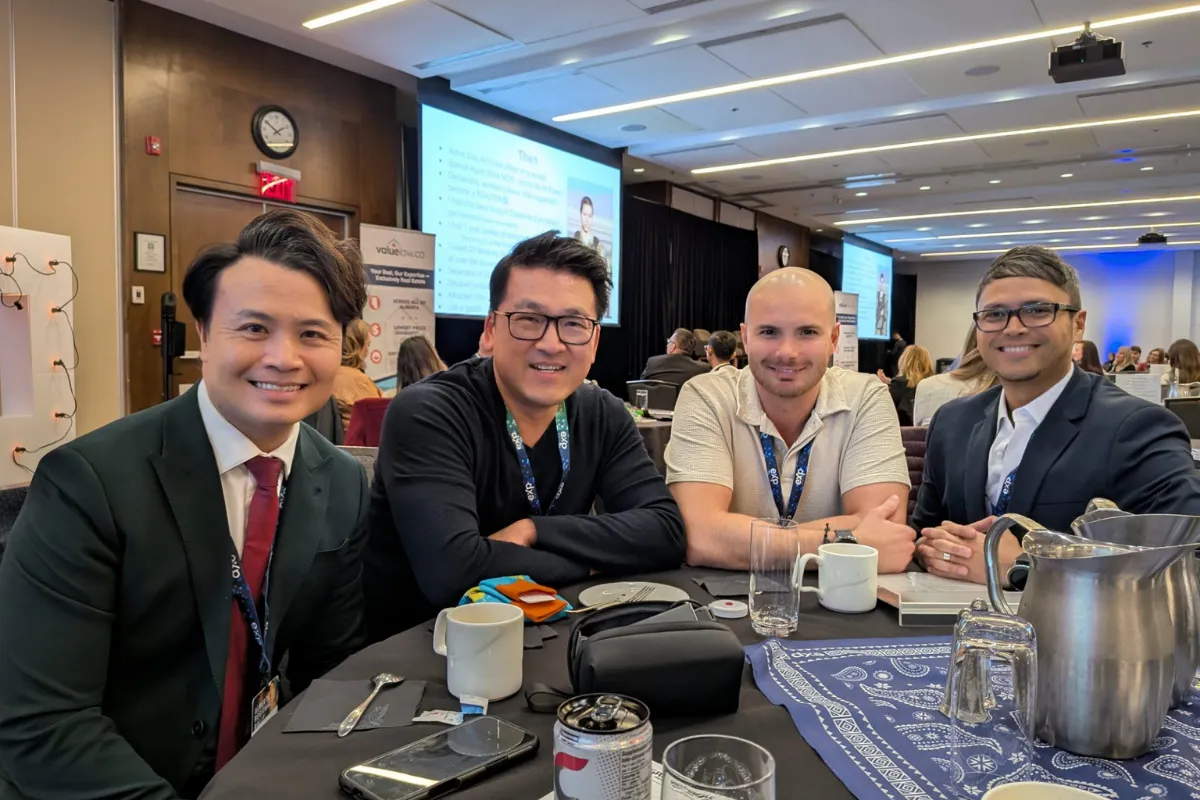
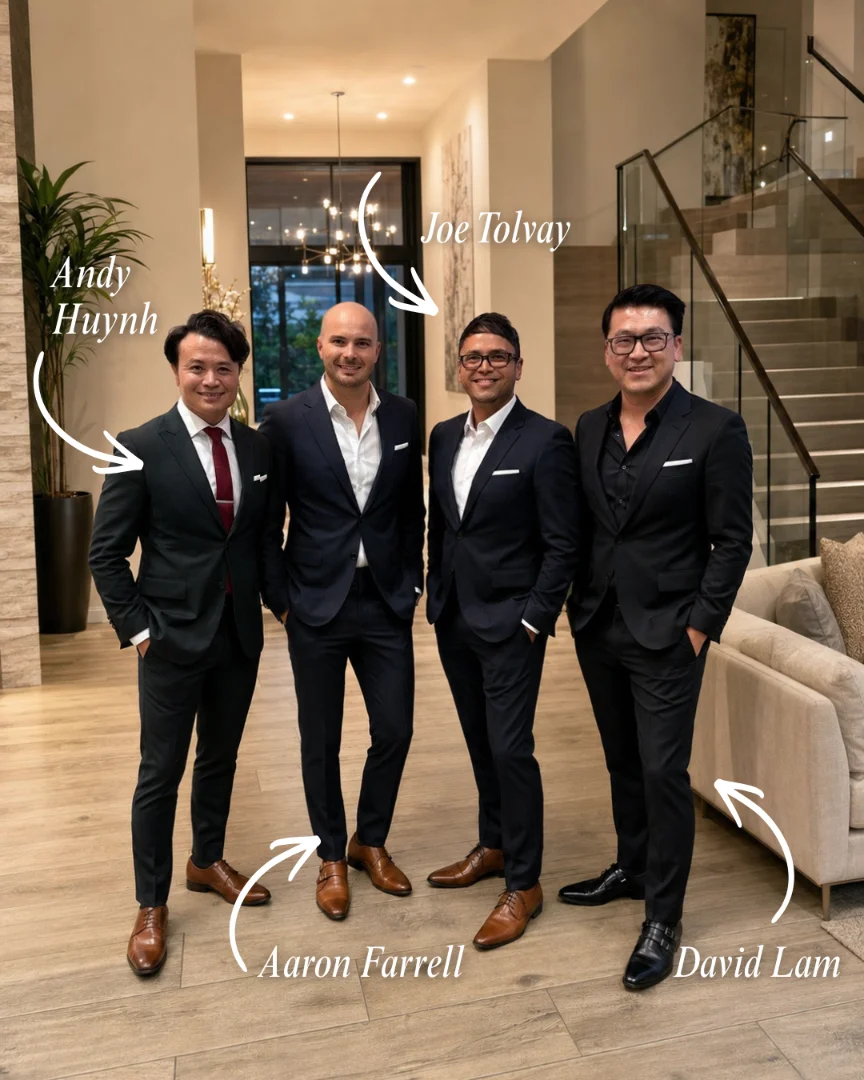
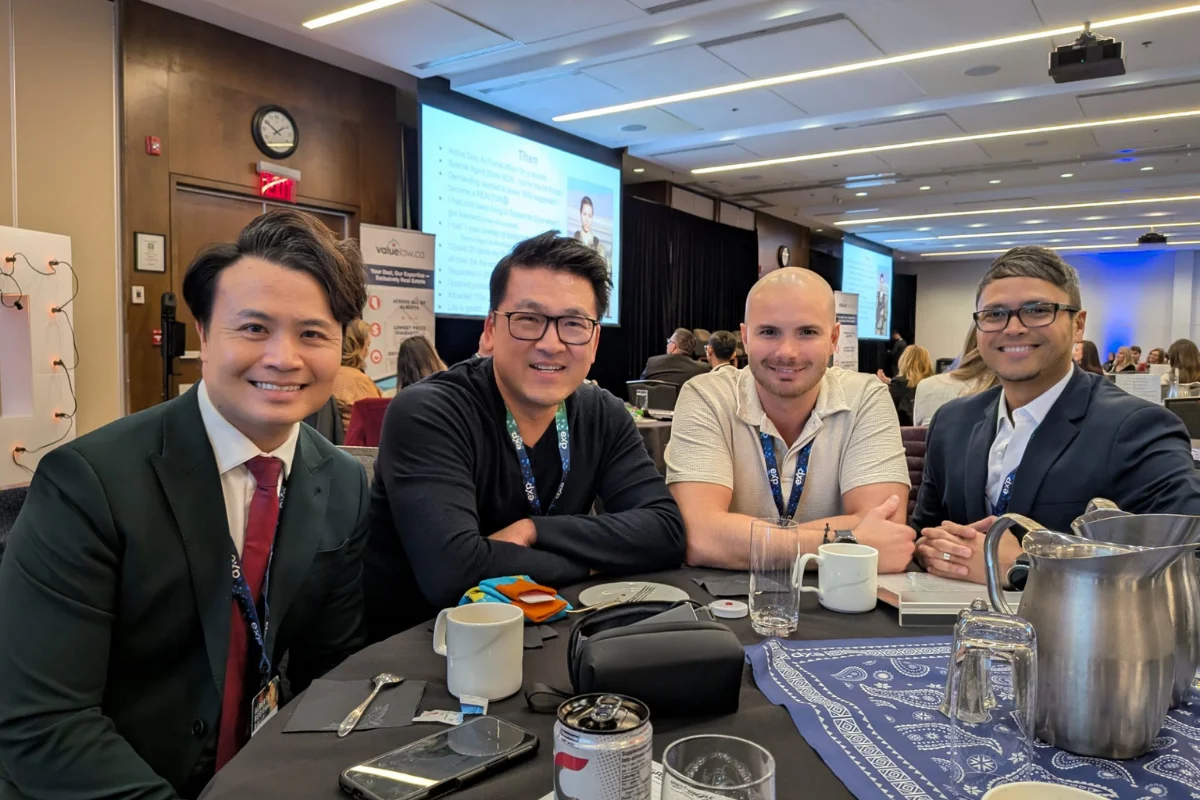
Aaron Farrell, Joe Tolvay, David Lam, and Andy Huynh were all successful producers who had reached Icon Agent status with eXp Realty. Then, in a move that would make plenty of team leaders nervous, all four voluntarily stopped selling real estate.
They gave up their own clients, commissions, and pipelines because they believed their agents would produce more if the people leading them were no longer distracted by deals of their own.
It was a serious gamble, but their agents’ production doubled.
Why They All Had to Stop Selling
The decision took shape when Team Legacy merged with Aaron’s Compass Real Estate Group in September of 2025.
Before the merger, Aaron had built the technology and administrative support needed to accommodate a team of roughly 50 agents. The only problem was that he only had five.
Team Legacy had the opposite experience. Joe, David, and Andy had successful agents and significant production, but they were constantly trying to build new processes fast enough to support the business they already had.
Aaron had also proven that the right support could free a team leader from being physically involved in every transaction. At one point, he was running agents in Edmonton and Calgary while living in Mexico.
Joining forces made sense. Together, the two teams finished 2025 with a combined 187 transactions and $89.7 million in sales volume.
Once the merger conversation began, however, the four men had to address a potentially awkward issue. Aaron would be responsible for running the administrative team, managing technology, and handling much of the behind-the-scenes work. If the other three continued collecting commissions from their own clients, the arrangement would become uneven very quickly.
“The only way this really works is if we’re all out of production together,” Joe said. “Otherwise, we’re still doing our own business, and it’s not fair to Aaron to be doing all this work in the back end while we’re still pounding the pavement.”
They also knew that continuing to sell would divide their attention. An agent could call with an urgent contract question, but a team leader with clients of his own might be in the middle of a showing, negotiation, or listing appointment.
Getting out of production meant Team Legacy’s agents would become their full-time focus. It also removed any question about whether team leaders were competing with agents for opportunities.
One Agent Went From Zero Deals to 10
The team points to Glenn Vieneau as one of the clearest examples of how much can change when agents have access to that level of support.
Glenn was working in real estate part time and had gone five months without closing a single transaction. After the merger, Team Legacy put him through its launch week and a 90-day plan designed to help agents begin securing business.
Within the next few months, Glenn transitioned into real estate full time, closed four transactions, and put another six under contract.
His appointment conversion rate also climbed to 21.5%. Aaron said the team uses approximately 10% as its reference point for the average agent, which means Glenn is converting at more than twice that rate.
Glenn’s explanation for the turnaround was refreshingly uncomplicated. He stopped trying to create his own version of every strategy and started following the training exactly as it was taught.
“I just listened to what David said,” Glenn told the team. “I recorded it, and I said it word for word to this person, and then they signed with me. I don’t know how I can make it any easier for myself.”
Of course, following the advice becomes much easier when the person who gave it is available to help in real time.
So, What Do Four Former Producers Do All Day?
Instead of expecting every leader to coach every agent on every part of the business, the four divided the work based on what each person actually enjoys doing.
Aaron handles the work that keeps transactions and agents from getting buried in administrative tasks. He hires and trains the team’s support staff, which includes two transaction coordinators, an inside sales agent, and an executive assistant. He also manages the CRM, AI automations, and the technology agents use throughout the day.
Joe affectionately calls him “Oz behind the curtain.”
David is the person agents call when a deal gets complicated. As an eight-time Icon Agent, he helps them prepare for appointments, work through negotiations, interpret contracts, and decide what to say to a client. He will also join a phone call or attend an appointment when an agent needs him.
The team informally refers to him as its “agent hotline.”
That availability gives agents access to coaching at the exact moment they need it. A weekly training session can cover common situations, but it cannot predict every inspection issue, difficult negotiation, or unusual client request an agent will encounter.
Joe helps agents figure out which part of their business needs attention next. When one agent decided she wanted to pursue listings after spending two and a half years working primarily with buyers, Joe did not hand her more buyer training. He helped her learn how to speak with sellers, uncover their concerns, and gather the right information before the listing appointment.
Andy works individually with agents who are struggling to make the jump between what they say they want and what they are doing. During the week of the interview, he was meeting one-on-one with every agent on the team to discuss their goals, habits, and reasons for pursuing real estate.
The leaders also meet with the team every weekday for a 15-minute virtual huddle. Agents can share a win or raise a current problem, giving them a chance to get help before a small issue follows them around for the rest of the week.
Experienced Agents Started Joining Them Too
Newer agents are not the only ones who see the appeal.
Three additional Icon Agents have joined Team Legacy because they wanted access to the team’s training, staff, and day-to-day support. Jazmin LaFramboise, who operated Raspberry Realty Group for more than 10 years, also brought her team members to Team Legacy after conversations with Joe and Aaron.
For an established agent, joining a team can sound like giving something up. Team Legacy found that some top producers were exhausted by everything they had to manage outside of selling.
Recreating Team Legacy’s support independently would require an agent to find and train transaction coordinators, hire administrative staff, build an onboarding program, manage technology, maintain a CRM, and create training for every stage of the transaction.
Some agents would rather skip all of that and get back to the part of real estate they enjoy.
“They just want to go out there and sell homes and enjoy life,” Joe said. “They don’t want to worry about the rest of the stuff.”
Their Agents’ Production Became the Only Production That Counted
Stepping away from personal production removed the four leaders’ safety net. They could no longer make up for a struggling agent roster by closing more deals themselves.
If their agents did not grow, neither would they.
That pressure forced the leaders to put their time where their promises were. They could answer the phone when an agent needed help, attend an appointment without worrying about their own client schedule, and spend their days fixing the problems that were keeping agents from producing.
For team leaders wondering whether they could do the same, Team Legacy’s story comes with one uncomfortable truth: fully focusing on agents may require walking away from some very good personal business.
Aaron, Joe, David, and Andy, however, decided it was worth the risk.
